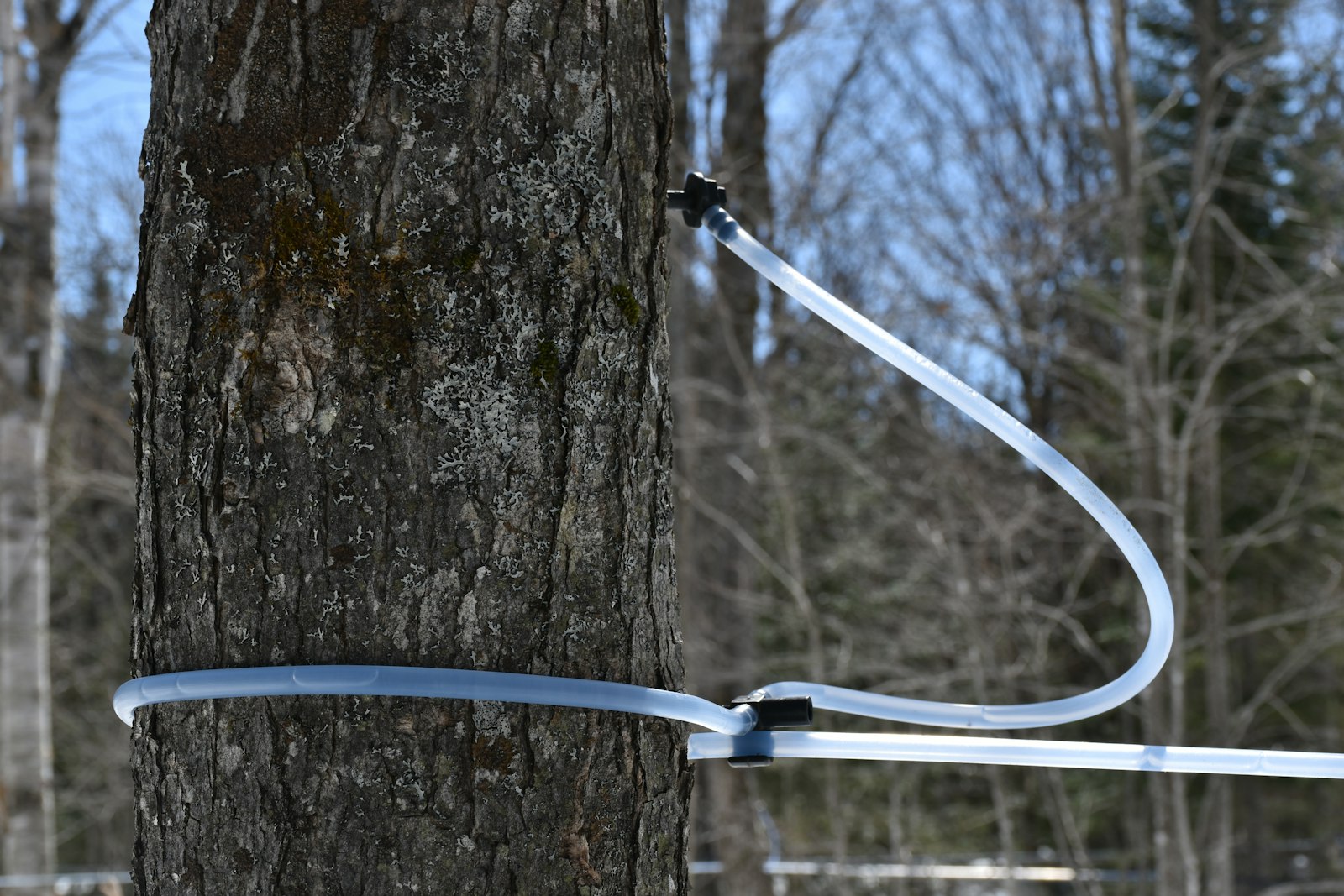

Protect the Taste
Sugarbush agentic AI and State Directory Credentialing Integration
A background AI agent that watches your sugar shack's syrup production and reports what it finds — tied to your farm's good name, the same one the state already knows as a licensed producer. You approve it once, for a set stretch of time, and it reports on its own during that stretch. Extending that time, or settling on a final grade, just takes a touch of your YubiKey — no password to remember.
About this site
This site is a Nittany AI Challenge Submission for the C=US project, part of the Nittany AI Alliance — AI for Good, Powered by Penn State.
Submitted by Peter Bachman.
What gets checked here
- ✓ That the farm running an agent is a registered business the state already knows — the same way you'd trust someone selling at the farmers' market.
- ✓ That this gets checked when the agent is created, and kept current after that by the same short-lived certificate that lets it act at all — not just once, back when it first signed up.
- ✓ That a specific physical security key was touched to grant or extend the agent's authority to keep doing what it's supposed to do.
- ✓ That the agent works on its own, reporting and acting, only within the authority you already granted — extending that authority always takes a fresh approval, not something that happens on its own.
Registering once isn't the whole story. In April 2026, a real Quebec producer was caught repeatedly selling syrup labeled "pure" and "from Quebec" that tested over 50% cane sugar — the province's own producers' federation called him a repeat offender, and his product was still on store shelves when it broke.1 There is a requirement for continual quality monitoring to make sure the product that reaches consumers is safe and represents known quality standards established by governments and industry advisory boards.
If the agent reports what it measures accurately, that same trust can reach the person actually buying your syrup — the same way a wine region's name lets a buyer who's never been there trust exactly where a bottle came from, especially since maple taste itself varies with where and how it's made.2 A trusted name alone isn't enough: Log Cabin syrup kept its brand name through a string of different owners while the real maple syrup in the bottle quietly dropped away, until most versions had none left at all. That is why this depends on the agent's data staying accurate, not just its name staying familiar.
Vermont, Quebec, and Pennsylvania already know who's a licensed maple producer, so that part isn't starting from scratch. This pilot is about knowing who's who and what they're allowed to do, not sensor engineering: an agent design and hardware sensor accurate enough to back a real grade proposal is a milestone after funding is achieved.
1 “Fake maple syrup class action now targeting major grocery store chains.” CBC News, August 19, 2026. See also “Grocery Giants Face Lawsuit Over ‘Phony’ Maple Syrup.” CTV Your Morning, YouTube.
2 North American Maple Syrup Producers Manual, 3rd ed. (Perkins, Heiligmann, Koelling & van den Berg, eds., 2022), "Maple Syrup Flavor," pp. 7-30–31: flavor forms through chemical reactions during heating shaped by sap and processing, producing flavor that varies "across and between seasons in the same operation" and that "is impossible to synthetically recreate." See the syrup quality reference.
How this works (technical detail)
The point is that you don't have to sweat any of these technical details. You authenticate with your security key on your laptop, mobile phone or iPad, and the rest happens automatically, but only with your approval. If you do want to understand the technical details, that's fine too: under the architecture, the entire process will be able to be viewed and audited.
Approval happens with WebAuthn, the same standard behind most hardware security keys: your farm's YubiKey signs a one-time challenge, and the browser never sees or stores a PIN. Once approved, the agent authenticates to the registry over mutual TLS (mTLS) — both sides present a certificate, not just the server. The registry itself is a national X.500 directory of persons and AI agents, named under c=US. A farm's listing is endorsed by the state where it does business, or by an endorser the state approves, such as a co-op, and it carries only the authority the state gives it. LDAP is how applications read it; this pilot uses OpenLDAP as an X.500-oriented stand-in.
The idea is to make this as self-service as possible, using the state or province as a root of trust that gives you a digital presence. The YubiKey enforces a secure human presence, separate from the AI agent's automation.
See the C=US project for the full technical write-up, including how the directory itself is structured and how it fits into the wider international picture.
What happens if a key is lost?
Losing the primary key stops that one approval capability — it doesn't expose anything, because a key can't act on its own; it has to be touched, and a PIN protects it if it's a FIDO2 key. The farm continues with its backup key.
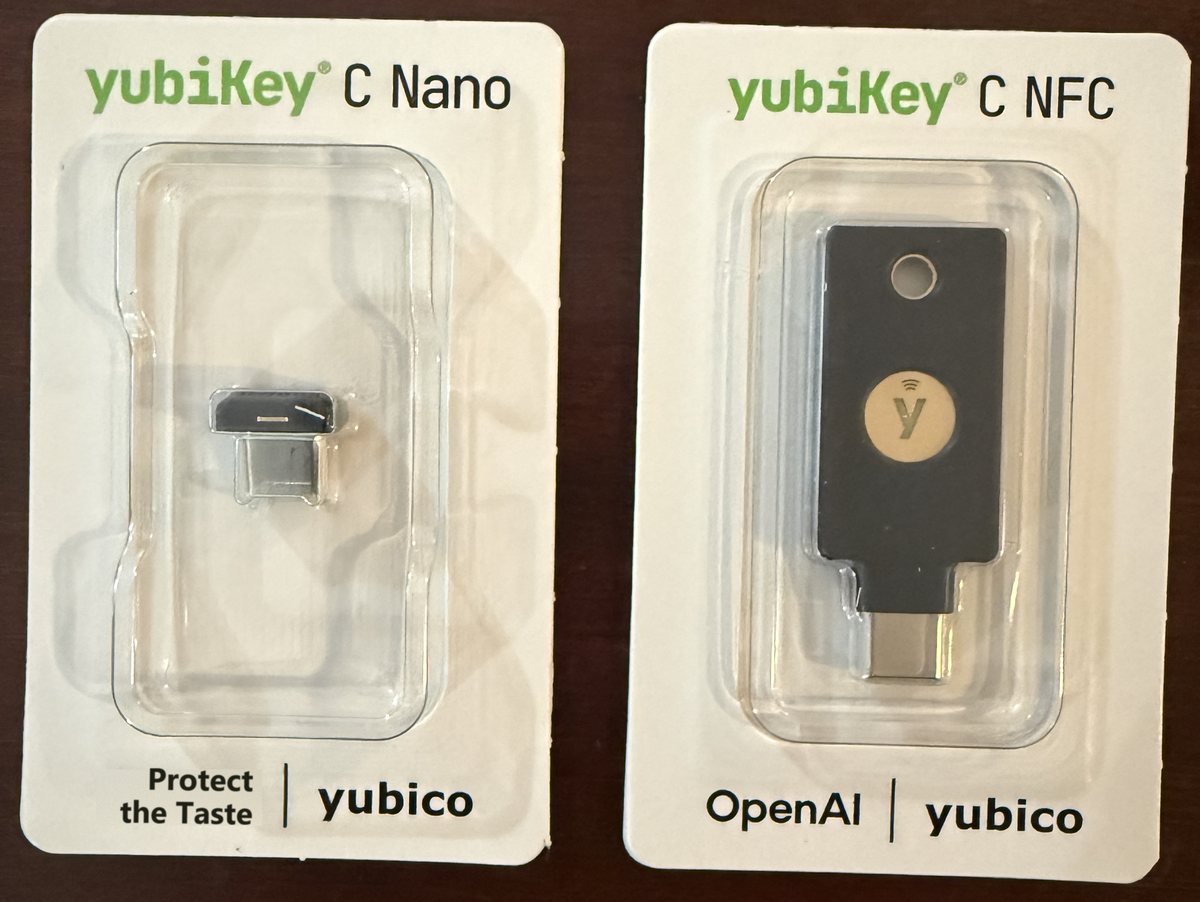
A farm needs a minimum of two YubiKeys: a primary and a backup. The registration mechanism itself does not cap the count beyond that: it lets the necessary number of keys be uniquely registered, however many that is, as set by the organization's own security policy. This project sets up the keys to work with the pilot; it does not sell YubiKeys. Pilot participants buy their own keys, or get them from a sponsor such as a government agency or a co-op. Keys can be sourced directly from Yubico, at retail from Best Buy, or in many other ways. Ordering directly from Yubico, as a channel partner on this website, has a 500-key minimum. If the project grows, private-label keys, like the OpenAI example, could become an option. Support is a milestone for a later stage of the project.
Prototype site: the demo screens are mock-ups, and nothing here is a real production deployment.